01
Sit regularly
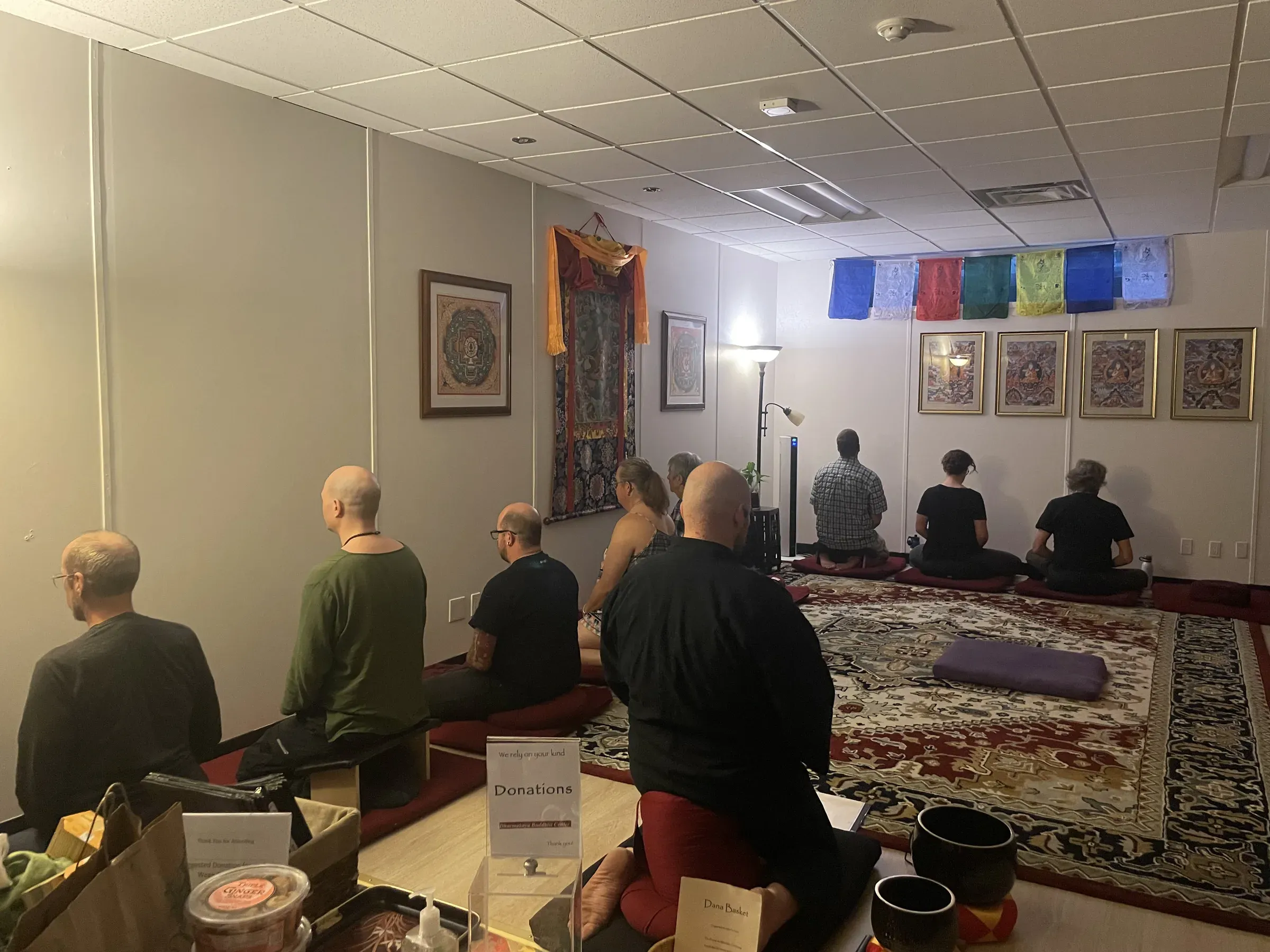
Zazen is the center of our practice. We sit together each week and encourage students to establish a regular practice at home. The direction is toward daily sitting, not immediate perfection.

Beginning Zen practice
Zen practice here begins with sitting down.
We meet to practice zazen, walking meditation, chanting, study, ceremony, and the ordinary work of caring for a sangha. These are not separate activities gathered under a Zen label. Together they form a way of training body, mind, attention, conduct, and relationship.
Newcomers are welcome to begin slowly. No previous experience or familiarity with Buddhism is required. As practice develops, we encourage a steady rhythm of home sitting, weekly sangha practice, study, and attention to the precepts in daily life.
You are welcome to begin without knowing whether Zen is right for you.
Come sit, learn the forms, ask questions, and see what the practice reveals. Nothing needs to be decided in advance.
If you continue, the invitation becomes more concrete: sit regularly, practice with others, study the teachings, receive guidance, and allow the precepts to enter your life.
Zazen is the center, but not the whole, of Zen practice. The practice takes shape through a continuing relationship among sitting, community, study, guidance, service, and daily life.
01
Zazen is the center of our practice. We sit together each week and encourage students to establish a regular practice at home. The direction is toward daily sitting, not immediate perfection.
02
Zen is not only a private meditation practice. Sangha gives us forms, relationships, responsibilities, friction, encouragement, and opportunities to see beyond our preferred version of ourselves.
03
We study Buddhist teachings, the precepts, and the writings of the Zen tradition. Dharma talks, group discussion, and individual practice discussion help connect those teachings with lived experience.
04
Work, family, caregiving, conflict, technology, money, food, and community life are not interruptions to practice. They are where vows and attention become concrete.
The clearest place to begin
Beginner’s Night is held on the first Monday of each month from 6:30–8:00 pm at Dharmakaya Buddhist Center.
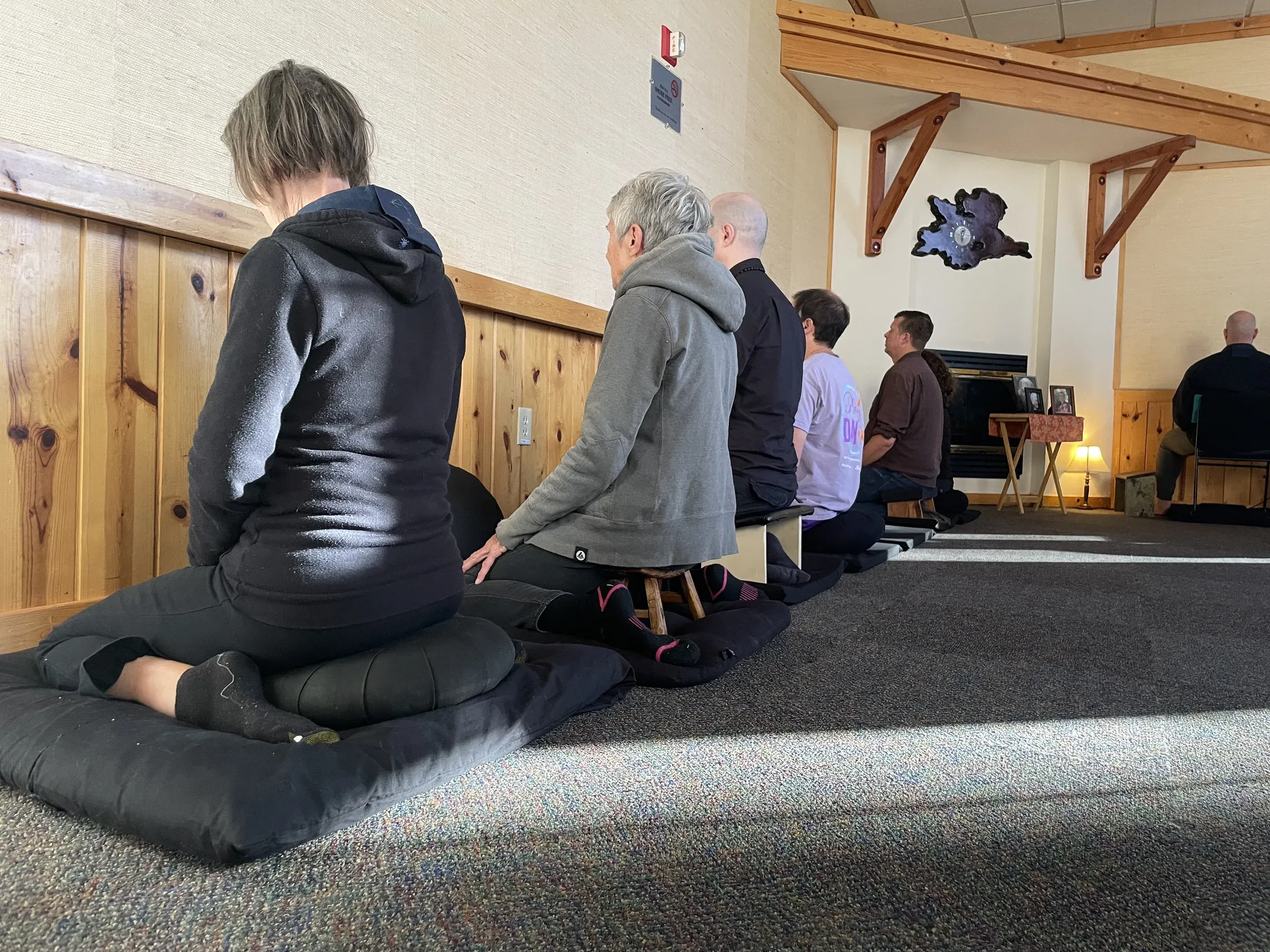
The evening includes meditation instruction, an introduction to the forms we use, shorter periods of practice, and time for questions. No previous Zen or meditation experience is needed.
You may also begin by attending Tuesday zazenkai. Let us know that it is your first visit and arrive a little early so someone can help you settle in.
Come a little early. A practice leader will show you the room, help you choose a cushion, bench, or chair, and explain anything you need to know.
At Beginner’s Night, we introduce posture, breathing, attention, and ways to adapt the practice to your body.
The evening includes periods of seated meditation and kinhin, or walking meditation. Tuesday zazenkai may include longer periods than Beginner’s Night.
Depending on the evening, there may be bowing, chanting, a ceremony, a dharma talk, or group discussion. You may follow along as you are able.
There is time to ask about meditation, Zen, the forms, or what a continuing practice might look like.
What to wear
Comfortable, modest clothing that allows you to sit and move easily. Dark or neutral clothing is helpful but not required for a first visit.
What to bring
Nothing special. Cushions, benches, chairs, and chant books are available.
When to arrive
Arrive about fifteen minutes early, especially on your first evening.
Accessibility
Chairs and posture adaptations are normal parts of practice. Tell us what support would help you participate.
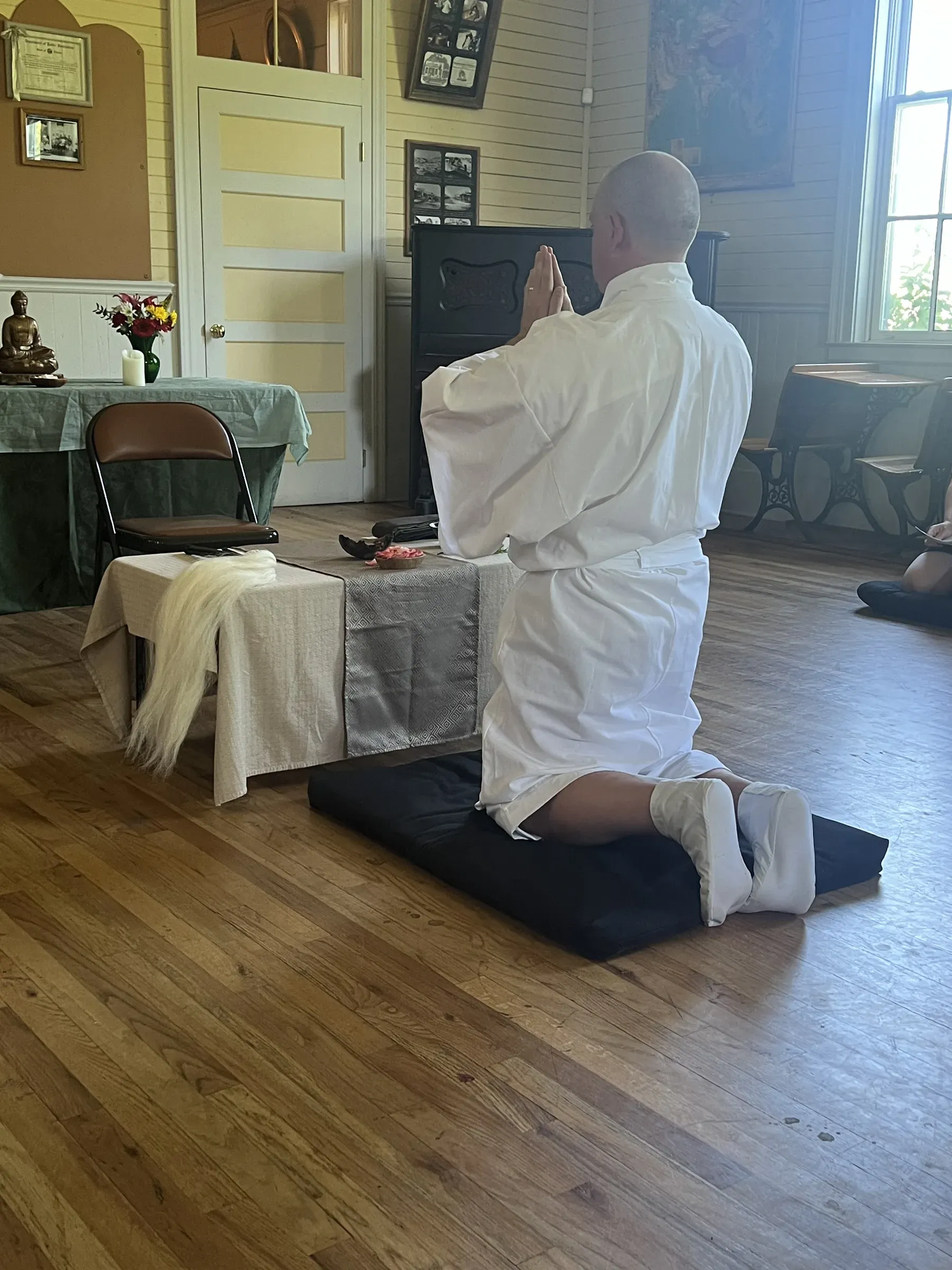
Facing the Mountain is a Buddhist community in the Sōtō Zen tradition, not a secular meditation class. Our practice includes bowing, chanting, robes, altars, ceremonies, and forms inherited through Japanese Zen.
You are not expected to know these forms before attending, and no one is graded on performing them correctly. We teach them gradually and explain what we are doing. At first, you may simply follow along, observe, or ask for help.
The forms are not intended as decoration or cultural performance. They give the community a shared way to move, pay attention, express gratitude, and practice putting the self down for a moment.
You do not need to call yourself Buddhist or adopt beliefs before practicing with us. We do ask that students approach the Buddhist context of the practice with openness and respect.
There is room to visit, ask questions, and learn slowly. Over time, however, Zen becomes real through practice: sitting, studying, participating, receiving guidance, and bringing the precepts into ordinary life.
These movements are not membership levels or a fixed ladder. They describe a common way practice becomes more stable, relational, and concrete.
01
Attend Beginner’s Night or zazenkai. Learn how to sit, ask basic questions, and notice what the practice and community are actually like.
02
Sit at home regularly, return to weekly practice, and begin learning the basic forms. The new-student guide can support this stage.
03
Participate in study, ceremonies, practice periods, retreats, work practice, and individual practice discussion. Begin studying the precepts as lived commitments rather than abstract rules.
04
Some students choose jukai and formally receive the precepts. A smaller number may explore lay entrustment, priest training, or other forms of long-term service. These paths develop through sustained practice and relationship.
Our new-student guide introduces zazen, home practice, the forms of the zendo, common questions about Zen, and a suggested rhythm for the first month.
The guide is here to help you start well—not perfectly, just honestly.
Yes. Facing the Mountain is a Buddhist community in the Sōtō Zen tradition. People of any faith or no particular faith are welcome to attend, but Buddhist teachings, precepts, ceremonies, and lineage are integral to what we do.
No. Beginner’s Night is intended for people beginning from zero, including people who are unsure what Zen practice involves.
No. Chairs, benches, cushions, and other adaptations are all valid. The aim is a stable, awake posture, not forcing the body into a particular shape.
That is expected. Follow along as you are able, observe when needed, and ask for help. Instruction is part of practice, and mistakes are ordinary.
Occasional visitors are welcome. Anyone wishing to develop a Zen practice will benefit from a regular rhythm of home sitting and participation with the sangha.
No identity declaration is required. Continued Zen practice does involve engaging sincerely with Buddhist teachings, ethical precepts, and communal forms.
Short 15-minute Q&A appointments with one of our priests may be available by request. Email us and we will arrange a time when possible.
Warm threshold · clear center
You do not need to arrive certain that Zen is your path. Come sit with us, meet the sangha, and begin from where you are.